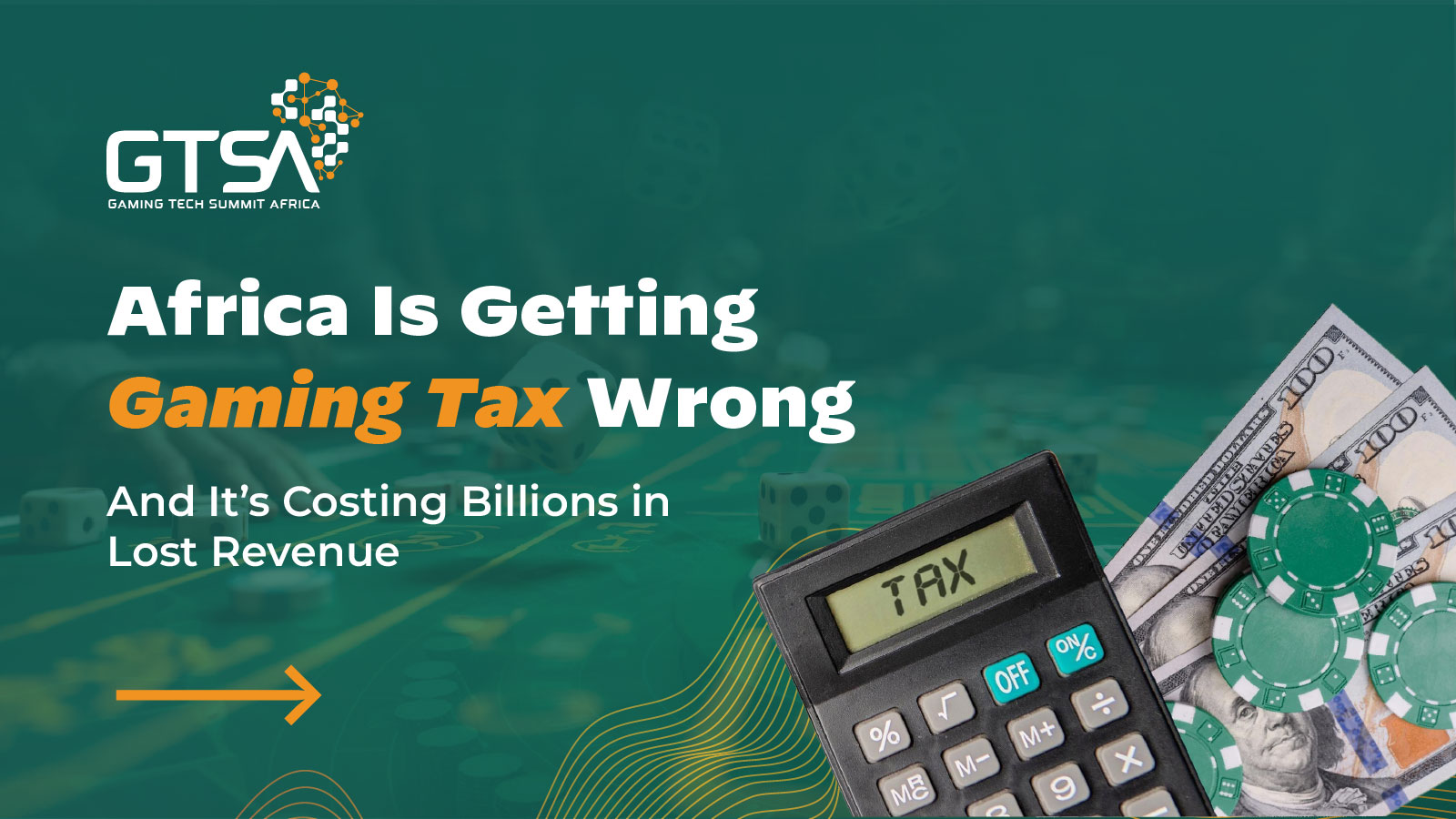
50%. That is the tax rate currently charged on gambling winnings in Gambia, the highest on the continent.
South Africa is now proposing a 20% levy on Gross Gaming Revenue (GGR). If implemented, total taxation could rise to nearly 39%, placing it among the most heavily taxed gaming markets globally.
On paper, these policies are designed to increase government revenue. In practice, they often create the opposite effect.
When taxation becomes excessive, operators exit, informal markets grow, and jobs disappear. What follows is not higher revenue, but a shrinking tax base and a system that becomes harder to regulate.
Africa has seen this pattern play out before. What’s different now is that the continent is beginning to question it.
From Turnover to GGR
For years, many African markets relied on turnover-based taxation, taxing operators on the total value of bets placed rather than what they actually earn.
But gaming is not structured like most industries. It is a high-volume, low-margin business, where revenue and profit are not the same thing. Under a turnover model, operators could be taxed beyond their actual earnings, a model that is difficult to sustain over time.
The consequences were predictable. Some operators struggled to remain viable. Others moved offshore, where regulation and taxation is lighter. In both cases, governments lost the very revenue they were trying to protect.
However, more mature markets have already adjusted for this. Countries like the UK and Malta shifted toward GGR-based taxation, aligning tax with actual revenue rather than volume. The result has been a more stable operator environment and more consistent public revenue.
Across Africa, that same shift is beginning to take hold. Markets like South Africa and Ghana are moving in this direction, recognizing that sustainable taxation must reflect how the industry actually works.
Real-Time Taxation Is Changing the Equation
Taxation is no longer dependent on periodic reporting and delayed audits. Instead, several African markets are moving toward real-time monitoring systems, allowing regulators to track activity as it happens.
Kenya provides one of the clearest examples. Under the Gambling Control Act 2025, operators are required to integrate directly with the regulator’s systems, providing real-time visibility into bets, payments, and winnings.
Even before the Act came into effect, the Kenya Revenue Authority (KRA) had already integrated 36 operators into its system. The outcome was immediate: a 30% increase in revenue between 2023 and 2025.
This shift moves taxation from a reactive to a continuous process, reducing leakage, improving compliance, and increasing transparency across the ecosystem.
When Taxation Goes Too Far
There is growing evidence that poorly designed tax systems don’t just create inefficiencies; they actively push the market in the wrong direction.
A recent report estimates that Africa could lose up to $11 billion in revenue by 2029 if high and fragmented tax regimes continue to drive players toward unregulated platforms.
This is already happening. When legal platforms become too expensive or restrictive, players turn to offshore alternatives where there is little to no oversight. These platforms do not contribute to local economies, do not protect users, and do not comply with regulatory standards.
Several countries have started to respond.
Kenya simplified its tax structure by removing excise duty on stakes and introducing more targeted taxes on deposits and withdrawals. Malawi reduced its tax on winnings to encourage legal participation. Nigeria is working toward consolidating multiple layers of taxation into a more unified and predictable framework.
What these changes have in common is a recognition that complexity and excess do not drive compliance; they undermine it.
The Role of GTSA 2026 in Designing Smarter Gambling Tax Models
Taxation is no longer just a policy issue. It’s one of the biggest levers shaping the future of gaming in Africa, influencing where operators invest, how markets grow, and whether regulation actually works.
At Gaming Tech Summit Africa (GTSA) 2026, this conversation takes center stage.
We’re bringing together regulators, operators, compliance experts, and strategic industry players from across the continent to tackle a question the industry can’t avoid anymore: How do we design tax models that protect revenue without slowing growth?
And this time, the conversation goes beyond theory.
We’ll be unpacking what’s really happening across markets today, what’s working, what’s breaking, and where the pressure points are. From there, the focus shifts to what actually makes a model sustainable in Africa’s reality: mobile-first, high-volume, and increasingly cross-border.
These are the conversations shaping the next phase of the industry.
And at GTSA 2026, the goal isn’t just to talk about them; it’s to leave with clearer direction on what works.
If you’re building, regulating, or investing in Africa’s gaming ecosystem, this is one room you want to be in.
Join us at GTSA 2026 and define how gaming taxation works across Africa.
Sign up: www.gamingtechsummit.africa